
Code Integrity Review - Politics
Albania Protests: Violence Erupts in Tirana Over Corruption
Published October 18, 2026 · 11:46 PM
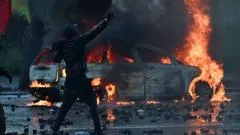
Violent clashes between students and riot police have gripped Tirana for five days as anti-government protests escalate. Amid corruption allegations and high-level arrests, the movement is calling for a revolution and the resignation of Prime Minister Edi Rama.
What sparked the anti-government protests in Albania?
The protests in Albania began in the early summer, initially fueled by corruption allegations linked to the administration of Prime Minister Edi Rama. What started as localized grievances has rapidly evolved into a much wider anti-government movement. The core of the dissatisfaction lies with what protesters describe as a "whole corrupt political class." This sentiment has moved beyond specific policy disagreements to a fundamental rejection of the current political leadership.
The movement is characterized by a sense of betrayal among the citizenry. Protesters are not just targeting specific laws but are calling for the resignation of the Prime Minister himself. The momentum of these demonstrations suggests that the corruption allegations have acted as a catalyst for long-standing frustrations regarding governance and accountability in the country.
How have the protests unfolded in Tirana?
In Tirana, the capital of Albania, the center of the city increasingly resembles a war zone, littered with broken glass and burnt debris. For five days, demonstrators and riot police have been engaged in pitched battles. Masked protesters, many of them high school and university students, have targeted the education ministry, using rocks and petrol bombs to challenge police lines. The sound of exploding petrol bombs has become a constant feature of the city's atmosphere.
The police response has been forceful. Authorities have deployed water cannons and volleys of tear gas to disperse the crowds. There are also reports that rubber bullets have been used for the first time during these clashes. On Saturday, the focus of the unrest shifted to the Prime Minister's office on the city's main boulevard, where crowds swelled to much larger numbers than on previous days. As the police responded with barrages of tear gas—some of which landed deep within the crowds, causing panic—the demonstrators waited for the air to clear before renewing their attacks. The scene has been further marked by the black smoke of burning vehicles and the persistent sirens of ambulances and police cars.
Who are the key figures involved in the protests?
The protests are driven by a young demographic. Among them is George, a 19-year-old medical student who works as an electrician to fund his education. Clad in goggles and a face mask, George represents the intensity of the student movement, stating that after 135 days of peaceful protest, the movement is now attempting a "revolution" similar to those seen in France. He argues that because the government does not want peace, the protesters are forced to use violence.
Another voice is 17-year-old Klea, a first-year university student, who noted that students are boycotting classes to fight for their rights. She also raised concerns about provocateurs who she alleges are smashing stores and banks specifically to discredit the demonstrations. On the institutional side, Prime Minister Edi Rama, who has dominated Albanian politics for 13 years, is the primary target of the unrest. While Rama blames the opposition Democratic Party and "foreign actors" for the chaos, the protesters see him as the face of a corrupt system.
What are the implications for Albania's EU aspirations?
The unrest presents a significant irony for Albania's international standing. Prime Minister Edi Rama has long been viewed favorably by the European Union, an organization that Albania is working hard to join. Rama has set a goal for EU membership by 2030 and has urged citizens not to forget the "extraordinary things" the country has achieved under his leadership.
However, the current wave of protests and the accompanying corruption investigations threaten to tarnish this carefully cultivated image. The image of Rama as a charming leader steering the country toward prosperity is being challenged by the reality of street battles and high-level criminal allegations. If the instability persists, it could complicate the path toward EU integration, which requires stability and the rule of law.
What are the potential political outcomes of the protests?
The political landscape is currently at a breaking point. With 80 people already charged with disorder and hundreds more under investigation or arrested, the immediate concern is public safety and order. However, the long-term question remains: what comes next? Political analyst Lutfi Dervishi suggests that Rama is a victim of his own success; by concentrating so much power in his hands, he has become the sole lightning rod for all public grievances.
There are calls for systemic change. Osman Stafa, a prominent journalist and activist, has proposed the installation of a "neutral, caretaker government for one year" to organize new elections. This would provide a transition away from the current administration. Currently, Rama's Socialist Party holds a comfortable majority with 83 out of 140 seats, and the next scheduled parliamentary elections are not due until 2029, making the current pressure for early change even more significant.
How has the legal system impacted the administration?
Parallel to the street protests, the legal system is mounting its own challenge to the Rama administration. The special prosecution service, established in 2019 under pressure from the EU and US, has recently made high-profile arrests. Most notably, the powerful secret service chief, Vlora Hyseni, has been arrested. She is accused of helping Ergys Agasi, a prominent businessman and former government official, to evade justice.
Agasi, a personal friend of the Prime Minister, denies all allegations of corruption. While Hyseni claims she was merely attempting to recruit Agasi for the intelligence services, several Albanian media outlets have alleged that he acted as an intermediary between the Prime Minister and organized criminal groups. While Rama admits to knowing Agasi, he denies any knowledge of illegal transactions. These investigations add a layer of institutional pressure that mirrors the pressure from the streets.
Frequently asked questions
What triggered the protests in Albania?
The protests were triggered by corruption allegations against Prime Minister Edi Rama's administration, which eventually grew into a broader movement against the entire political class.
Who are the main participants in the protests?
The protests are heavily driven by students, including high school and university students, who are boycotting classes to demand political change.
How have the authorities responded to the protests?
Police have used water cannons, tear gas, and reportedly rubber bullets to manage the crowds in Tirana.
What impact could the protests have on Albania's EU aspirations?
The unrest and corruption allegations could tarnish Rama's reputation with the EU and potentially hinder Albania's goal of joining the union by 2030.
What are the potential political outcomes of the protests?
Potential outcomes include the resignation of the Prime Minister, the installation of a one-year caretaker government, or the organization of new elections.
Key takeaways
- Protests in Albania began due to corruption allegations against Prime Minister Edi Rama's administration.
- Demonstrators in Tirana, including many students, have engaged in violent clashes with riot police for five days.
- The unrest, alongside high-level arrests in the special prosecution service, threatens Albania's goal of EU membership by 2030.
- Protesters are calling for a revolution or a neutral caretaker government to oversee new elections.
- Prime Minister Rama has blamed the unrest on the opposition and "foreign actors."
