
France riots 2026: Macron calls for order after widespread looting
Published October 18, 2026 · 11:25 PM
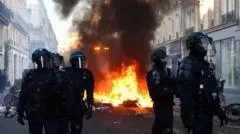
France faces significant civil unrest as protests against the cost of living turn into widespread rioting and looting, leading to thousands of arrests and damage to historic landmarks.
What triggered the France riots 2026?
The unrest was sparked by widespread dissatisfaction with the rising cost of living, specifically concerning fuel prices and the perceived decline in public services such as education. On Saturday, approximately 550,000 demonstrators participated in what were initially described as largely peaceful protests. These gatherings, which began as student-led movements last month, saw a significant surge in scale on Saturday when trade unions and various anti-government groups joined the ranks.
The escalation from peaceful protest to violent confrontation has left the nation grappling with the scale of the disruption. While the core grievances remain centered on economic pressures, the manifestation of this anger has shifted toward direct action against both commercial interests and state symbols.
How widespread is the damage and violence?
The violence has affected multiple urban centers, with Paris, Marseille, Lille, and Lyon reporting significant instances of looting, arson, and clashes with security forces. In Limoges, the unrest resulted in the destruction of a major historical landmark, as the 19th-century city hall was gutted by fire, leading to the collapse of its roof and clock tower.
The scale of the physical and human impact is significant:
- Arrests: Approximately 2,400 individuals have been detained by authorities.
- Police Injuries: The interior ministry reported that roughly 1,000 officers were injured on Saturday, with seven sustaining serious injuries.
- Urban Destruction: Widespread looting of businesses and the burning of vehicles have been documented in several cities.
The impact on local communities and heritage
Beyond the economic loss to shopkeepers, the destruction of cultural heritage has caused deep emotional distress among citizens. In Limoges, residents expressed profound sadness over the loss of the historic city hall. Local sentiment suggests that targeting heritage buildings is viewed by many as a counterproductive act that harms the collective identity of the community rather than addressing the government's failings.
What is the government's response to the disorder?
President Emmanuel Macron has taken a firm stance against the violence, distinguishing between the "legitimate demands" of the protesters and the actions of those who engaged in destruction and looting. In his address from the Élysée Palace, he warned participants against further escalation and stated that those responsible for the "unbridled" violence would face legal consequences.
To manage the ongoing instability, the government has implemented several measures:
- Security Coordination: Local mayors and prefects are tasked with drafting specific measures to protect commercial zones and civic infrastructure.
- Police Accountability: Macron has promised "full transparency" regarding the conduct of law enforcement, following reports of riot police using batons, tear gas, and water cannons on crowds.
- Law Enforcement Presence: Significant numbers of police are being deployed to prevent further looting in the capital and other major hubs.
How are political divisions shaping the crisis?
The riots are occurring against a backdrop of extreme political polarization as France prepares for national elections in April 2026. The current unrest has become a focal point for various political factions, each utilizing the chaos to bolster their respective platforms.
The political reaction has been split along ideological lines:
This fragmentation suggests that the social unrest may serve as a precursor to a highly contentious electoral battle between the hard-right and hard-left blocs.
FAQ: France riots 2026
Why are people protesting in France?
The protests are driven by economic grievances, primarily rising fuel prices and the increasing cost of living. Additionally, demonstrators are expressing frustration over deteriorating public services, including the quality of the national school system, which has fueled broader anti-government sentiment.
How many people have been arrested?
According to the French interior ministry, approximately 2,400 people have been arrested in connection with the widespread rioting and looting. These arrests follow several days of intense clashes between protesters, looters, and security forces across the country.
What damage has been reported to public buildings?
Significant damage has been reported to civic infrastructure, most notably in Limoges, where the 19th-century city hall suffered a major fire that caused its roof and clock tower to collapse. Other public buildings have also been targeted during the unrest.
How has the police response been characterized?
The police response has been a subject of debate. While the interior ministry noted that 1,000 officers were injured, there have been calls for transparency regarding the use of tear gas, water cannons, and batons by riot police during the demonstrations.
What is the political significance of these riots?
The riots highlight deep political divisions in France ahead of the April 2026 elections. The unrest has allowed various political leaders to frame the crisis in ways that align with their ideologies, intensifying the competition between hard-left and hard-right factions.
Key takeaways
- Protests against fuel prices and cost of living escalated into widespread rioting and looting.
- Approximately 2,400 people have been arrested following the civil unrest.
- Major landmarks, including the Limoges city hall, have suffered significant fire damage.
- The unrest occurs as France prepares for pivotal elections in April 2026.
The path toward stability
The current state of disorder in France represents a complex intersection of economic hardship and political volatility. While President Macron has called for a return to order and promised legal accountability, the underlying causes of the unrest—inflation and service degradation—remain unresolved. As the country moves toward the April elections, the ability of the state to restore security while addressing the legitimate socio-economic concerns of its citizens will likely determine the political landscape for years to come.
| Political Figure/Group | Stance on the Unrest |
|---|---|
| Laurent Nuñez (Interior Minister) | Blamed "far-left individuals" for targeting public buildings and "delinquents" for looting businesses. |
| Jean-Luc Mélenchon (La France Insoumise) | Criticized the police and ministry for "complete incompetence" and "organized chaos." |
| Marine Le Pen (National Rally) | Condemned the "exploitation" of public anger by forces that encourage violence. |
| Emmanuel Macron (President) | Called for order while distinguishing legitimate protest from criminal looting. |
