
Canadian military base fire: 4 dead, 19 critical in Alberta
Published October 18, 2026 · 11:34 PM
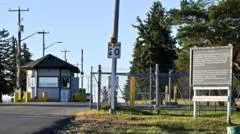
A devastating fire at CFB Wainwright in Alberta has killed four service members and left 19 in critical condition. Investigations are ongoing into how a grass fire escalated due to extreme winds.
What is the current casualty count from the CFB Wainwright fire?
Four service members have been confirmed dead following the intense fire at Canadian Forces Base Wainwright, with a significant number of others requiring urgent medical intervention. According to official reports, a total of 39 people have been transported to hospitals, 19 of whom remain in critical condition due to the severity of their injuries.
The medical response was characterized by a high volume of trauma cases, many involving severe burns. On Saturday evening, the Royal Alexandra Hospital in Edmonton was forced to declare a 'code orange,' a specific disaster response protocol triggered by high-casualty incidents. While the code was stood down on Sunday afternoon, the medical strain on the region was evident.
A physician speaking to the Canadian public broadcaster CBC noted that the hospital facility had been 'completely overwhelmed' by the influx of patients. Alberta's health service confirmed that the emergency response lasted for 10 hours, utilizing a massive mobilization of resources, including 22 ambulances and eight aircraft, to manage the crisis.
Medical response and hospital status
The scale of the casualties necessitated an unprecedented deployment of emergency services in the Alberta region. The use of eight aircraft suggests that many victims required rapid aeromedical evacuation from the rural training grounds to major trauma centers. Health officials have indicated that the ongoing care for those injured is expected to be intensive, reflecting the life-threatening nature of the burns and injuries sustained during the blaze.
How did the fire start and what is the cause?
The exact origin of the fire remains under investigation by military and civilian authorities, though initial reports point to a grass fire on a training range. Major-General Wade Rutland, Commander of the 1st Canadian Division, stated that a grass fire ignited on a range and was subsequently driven by 'uncommonly strong winds' that caused the flames to spread rapidly and shift direction toward soldiers engaged in exercises.
There has been significant scrutiny regarding whether the fire was linked to military activities. While local media outlets initially suggested that a gas main might have been struck during a live firing exercise, the Canadian military has since clarified its position. Investigators have stated they do not believe any explosions occurred involving oil or gas infrastructure.
The Canadian defence ministry has also addressed concerns regarding the intent behind the fire. At this stage, officials have stated there are no indications that the incident was the result of any terrorist activity. The investigation is currently focused on the environmental and operational factors that allowed a localized grass fire to escalate into a catastrophic event.
What was the impact of the weather during the incident?
Extreme weather conditions played a decisive role in the rapid escalation of the fire, transforming a localized ignition into a major disaster. Major-General Wade Rutland highlighted that the winds were 'uncommonly strong,' which not only accelerated the spread of the flames but also caused them to shift direction unpredictably.
This unpredictability was particularly dangerous for the personnel on the ground. The soldiers were actively participating in exercises when the fire moved toward them, leaving little time for safe evacuation. The combination of high winds and the nature of the terrain at the training range created a volatile environment that was difficult for even professional crews to manage.
Prime Minister Mark Carney described the fire as 'violent' and 'fast-moving,' emphasizing the difficulty of the containment efforts. Military and civilian fire crews worked through the night under what the Prime Minister described as 'some of the worst conditions imaginable,' risking their lives to mitigate the damage and protect the surrounding area.
Where is CFB Wainwright located and what is its significance?
Canadian Forces Base Wainwright is a vital military installation situated in a rural part of Alberta, approximately 120 miles (193km) from Edmonton and 180 miles (290km) from Calgary. As one of the most active training bases for the Canadian Army, it serves as a critical hub for large-scale military readiness.
The base's importance extends beyond land forces, as its airfield is also utilized by the Royal Canadian Air Force. This dual-purpose utility makes it a central location for integrated training exercises involving both ground and air components.
While the population of the base fluctuates depending on the training schedule, it can host more than 1,000 personnel at any given time. The high density of personnel during active exercises likely contributed to the high number of casualties when the fire swept through the training ranges.
Key takeaways
- Four service members are confirmed dead and 19 remain in critical condition following the fire.
- The fire originated as a grass fire on a training range and was spread by extreme winds.
- The Canadian defence ministry reports no evidence of terrorist involvement in the incident.
- The Royal Alexandra Hospital in Edmonton implemented a code orange disaster protocol.
- The incident occurred at CFB Wainwright, a major training hub in rural Alberta.
Frequently asked questions
How many people were injured in the CFB Wainwright fire?
A total of 39 people were sent to the hospital following the incident. Of these, 19 individuals are currently listed in critical condition, with many suffering from severe burns sustained during the rapid spread of the flames.
Was the fire caused by a terrorist attack?
No, there is currently no evidence to suggest the fire was an act of terrorism. The Canadian defence ministry has stated that investigations are ongoing, but no indications of terrorist activity have been found at this time.
What role did the weather play in the disaster?
Unusually strong winds caused the fire to spread with extreme speed and change direction suddenly. These wind conditions were a primary factor in why the fire moved toward soldiers participating in exercises on the range.
Did a gas explosion cause the fire?
While there were initial media reports suggesting a gas main might have been hit during live firing, the military has clarified that investigators do not believe any explosions involving oil or gas infrastructure occurred.
What is a 'code orange' in a hospital setting?
A code orange is a disaster response protocol used by hospitals, such as the Royal Alexandra Hospital, to manage a sudden influx of high-casualty patients during a major emergency or mass casualty incident.
Conclusion
The fire at CFB Wainwright represents a profound tragedy for the Canadian military and the province of Alberta. With four lives lost and dozens more injured, the scale of the human cost is significant. While the immediate emergency response has transitioned from active firefighting to medical stabilization, the investigation into the fire's origin continues. As authorities work to determine exactly how a grass fire escalated into such a violent event, the focus remains on the recovery of the injured and the ongoing support for the military community affected by this unprecedented peacetime disaster.
