
Amelia Earhart Nikumaroro expedition resumes now
Published October 18, 2026 · 11:34 PM
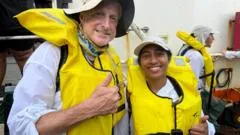
After being delayed by severe Pacific weather, researchers have resumed their search for Amelia Earhart's plane on Nikumaroro Island, focusing on the mysterious 'Taraia Object'.
Why is the search for Amelia Earhart's plane significant?
The search for Amelia Earhart's plane is significant due to the enduring mystery of her disappearance in 1937, an event that remains one of the most intriguing aviation mysteries of the 20th century. Earhart, a pioneering aviator, was attempting to circumnavigate the globe in her twin-engine Lockheed Electra when she vanished. Having already successfully flown from California across South America, Africa, and Asia, she arrived in Lae, Papua New Guinea, on 2 July 1937.
From Lae, Earhart and her navigator, Fred Noonan, planned a route toward Hawaii and eventually back to California. However, the flight took a tragic turn when the plane vanished without a trace while attempting to reach Howland Island, a remote, uninhabited coral island near Nikumaroro, for refueling. This disappearance has spawned decades of speculation, fueling numerous theories and expeditions that continue to draw global interest today.
What is the Taraia Object and why is it important?
The Taraia Object is a mysterious formation spotted in aerial imagery within the lagoon of Nikumaroro Island. Researchers from Purdue University and the Archaeological Legacy Institute (ALI) believe this object could be the long-sought remnants of Earhart's Lockheed Electra. The importance of this object lies in its potential to provide the definitive evidence needed to solve the mystery of the aviator's fate.
Purdue University has noted that the object is visible in photography dating back as far as 1938. While the investigation is ongoing, the mere existence of such an anomaly in the lagoon has provided a focal point for the current expedition. If the object is indeed the aircraft, it could transform our understanding of Earhart's final moments. However, the object's identity remains a point of contention among experts.
How has weather affected the current expedition?
Severe weather, driven by strong El Niño conditions in the Pacific, has significantly hampered the progress of the current mission. For the research team aboard the vessel *Marin Mainiku*, the environment proved hostile, with rough seas and strong winds forcing them to remain on the ship for three days. This delay prevented the team from moving into the second of three planned phases of their investigation.
Sirisha Bandla, a technology specialist on the expedition, provided updates from the deck, noting that the crew was finally able to land on Nikumaroro after the weather cleared on Sunday. The planned work involves an underwater survey where objects will be probed to determine their depth and sediment will be dredged. While the weather has caused setbacks, the team has extended their expedition time to ensure they can complete the necessary fieldwork despite these environmental challenges.
What are the main theories about Earhart's disappearance?
Several theories exist regarding the fate of Earhart and Noonan. One prominent theory suggests that Earhart unintentionally navigated to Nikumaroro Island, where she may have ditched her plane and lived as a castaway. Proponents of this castaway theory point to historical context, such as a report from a 15-year-old in Florida who claimed to hear Earhart's voice repeating "New York City" over a shortwave radio shortly after she vanished. Some suggest this might have been a misunderstanding of Earhart identifying her location as being near the *SS Norwich City*.
Another theory posits that the plane crashed or ran out of fuel near Howland Island. While researchers have previously found evidence of a human presence on Nikumaroro around the time of the disappearance, no conclusive proof of the Electra has been found. Skeptics of the Nikumaroro theory argue that the Taraia Object might simply be a tree that fell from the atoll into the lagoon, rather than man-made wreckage.
What challenges do researchers face on Nikumaroro Island?
Researchers face significant logistical and environmental challenges on the uninhabited atoll. To access the lagoon, a boat must navigate a narrow gap in the reef that was created by the British in 1963 during the last time the island was inhabited. This narrow passage is dangerous, especially during periods of high winds. Before the recent weather cleared, wind gusts of up to 27 knots (31mph) meant that transport boats were at risk of being knocked into the reef by crashing waves.
The presence of the *SS Norwich City* wreck, a British merchant vessel that ran aground during a storm in 1929 and killed 11 people, serves as a reminder of the island's inherent dangers. Purdue University has noted that this historical wreck demonstrates the volatile nature of the area. These physical risks, combined with the remote location, make the technical aspects of the underwater survey and sediment dredging particularly difficult.
What are the next steps for the expedition?
Following the three-day weather delay, the expedition has been extended to ensure all fieldwork can be completed. The immediate priority is to continue the underwater survey, specifically the second phase which involves probing objects for depth and dredging sediment. The team is working under a tight schedule to make up for lost time, with Bandla noting the crew's excitement to get the work done.
Purdue University had suggested that the Taraia Object could potentially be identified within a matter of days, provided conditions remain stable. Rick Pettigrew, director of the Archaeological Legacy Institute, has emphasized that the team is mindful of the global interest in their work and intends to share results as soon as they are able. The expedition remains focused on determining whether the Taraia Object is indeed the Lockheed Electra or another natural or historical feature.
Frequently asked questions
What is the significance of the SS Norwich City wreck?
The *SS Norwich City* was a British merchant vessel that ran aground on Nikumaroro during a 1929 storm, resulting in 11 deaths. For researchers, the wreck serves as a testament to the dangerous conditions surrounding the island and may lend credence to theories regarding plane crashes in the area.
Why is the Taraia Object controversial?
The Taraia Object is controversial because its identity is unconfirmed. While Purdue researchers believe it could be the remnants of Earhart's plane, skeptics argue it could be a natural occurrence, such as a tree that fell from the atoll into the lagoon.
How has technology aided the search for Earhart's plane?
Technology such as aerial imagery, sonar imaging, and underwater probing has been central to the search. While some technological leads have proven incorrect—such as a 2024 sonar finding that turned out to be a rock formation—these tools allow researchers to investigate specific anomalies like the Taraia Object.
What role does Purdue University play in the expedition?
Purdue University, working alongside the Archaeological Legacy Institute (ALI), is spearheading the current expedition to investigate the Nikumaroro site and the Taraia Object.
What evidence has been found on Nikumaroro Island?
While there has been evidence of human presence on the island around the time of Earhart's disappearance, no definitive evidence of her Lockheed Electra has been found on the island to date.
Key takeaways
- The search for Amelia Earhart's plane has resumed on Nikumaroro Island following a weather delay.
- The 'Taraia Object' is the primary focus of the current underwater investigation.
- Severe weather and strong El Niño conditions initially prevented the team from landing.
- The expedition has been extended to allow for complete fieldwork, including sediment dredging.
- Theories regarding Earhart include a crash near Howland Island or a castaway scenario on Nikumaroro.
